United States
American Bobtail
The American Bobtail is a naturally occurring, wild-looking cat with a stubby tail, a powerful athletic build, and a remarkably dog-like temperament that makes it one of the most versatile and travel-friendly breeds in existence.
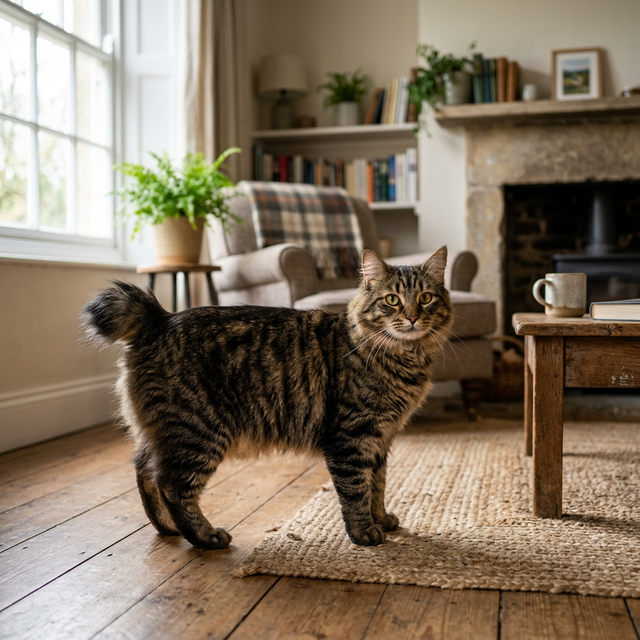
At first glance, the American Bobtail looks like it has just wandered in from the wilderness. Its short, expressive tail, broad muscular body, and alert, intelligent eyes give it the appearance of a miniature wildcat — specifically a bobcat, which is not a coincidence. But spend ten minutes with an American Bobtail and the wildcat illusion dissolves, replaced by an interactive, affectionate, and dog-like personality. This is a breed that walks on leashes, travels well in cars, and bonds so closely with its owners that some have been used as emotional support and therapy animals.
1. History and Origins: A Roadside Discovery
Unlike many breeds developed through deliberate crossbreeding programs, the American Bobtail traces its origins to a single chance encounter on a road trip.
John and Brenda Sanders
In the late 1960s, a couple named John and Brenda Sanders were driving through the southwestern United States when they encountered a short-tailed tabby kitten living on an Arizona Native American reservation. They brought the kitten home to Iowa and bred him with their color-point female cat. The resulting kittens showed a high frequency of the short tail trait, confirming that the gene was dominant.
Natural Mutation
The American Bobtail’s short tail is the result of a naturally occurring dominant genetic mutation — entirely separate from the mutation responsible for the Manx’s taillessness or the Japanese Bobtail’s tail type. The mutation affects only the tail, shortening it to varying degrees without the spinal complications associated with some other bobtail cats.
Development of the Breed
Early breeders selected for the rugged, wild appearance rather than for a specific color or coat type, which is why the American Bobtail comes in an unusually wide variety of coat types and colors. The CFA recognized the American Bobtail for championship competition in 2002. The International Cat Association (TICA) had recognized it earlier, in 1989.
2. Appearance: Built Like a Wildcat
The American Bobtail is shaped — by chance and selective breeding — to resemble a small wildcat while remaining entirely domestic.
The Tail
The defining feature is the tail: short, stubby, and expressive, typically one-third to one-half the length of a normal cat’s tail. The tail is visible above the back when the cat is alert, and it is carried upright rather than hanging down. No two American Bobtail tails are exactly alike — some are straight, some slightly curved or kinked, and some end in a distinctive pom-pom of longer hair.
The tail is the result of a random dominant mutation and can occur in any litter where one parent carries the gene. Two American Bobtails can produce kittens with normal-length tails, and these are still registered as American Bobtails.
Body Structure
This is a medium to large cat with a notably rectangular body shape — broad chest, well-developed musculature, and a hip that is as wide as the chest. The back is slightly arched when the cat stands naturally, giving it a characteristic “wild” posture. Males are substantially larger than females, with adult males weighing between 12 and 16 pounds and females between 7 and 11 pounds.
The legs are medium in length with large, round paws that may feature toe tufts — another feature that contributes to the wildcat aesthetic.
Head and Expression
The head is broad and wedge-shaped with a strong jaw and prominent brow ridges. The eyes are large, almond-shaped, and expressive — they can be any color, and the deep-set, slightly hooded quality of the eyes is one of the features most responsible for the cat’s wild appearance. The ears are medium-sized with rounded tips and prominent ear furnishings.
Coat Varieties
The American Bobtail comes in two coat lengths: shorthair and longhair. Both varieties have a double coat that is described as shaggy and wild-looking rather than sleek or plush. The longhair variety develops a particularly impressive ruff around the neck and face. Both coat types come in every possible color and pattern.
3. Personality: The Dog of the Cat World
The American Bobtail is consistently described as one of the most dog-like cat breeds — a reputation that is well-earned.
Strong Family Bonds
American Bobtails form strong attachments to their human families. They will follow their owners around the house, greet them at the door, and seek out physical contact with a persistence and warmth that surprises people who expect cats to be aloof. Their loyalty reads as more canine than feline.
Leash Training and Travel
This is one of the few cat breeds that adapts well to leash walking and travel. American Bobtails have a lower stress response to new environments than most breeds, which makes them good travel companions. Some American Bobtail owners report their cats riding comfortably in cars for long distances — a trait that is rare among cats.
This adaptability has made the American Bobtail popular with long-haul truck drivers and people who travel frequently. There are documented accounts of American Bobtails serving as “truck cats” — travelling companions for drivers on the road.
Intelligent and Interactive
American Bobtails are sharp problem-solvers. They figure out routines quickly, learn their names, respond to commands, and can be trained to perform simple tasks. They enjoy interactive play that challenges both their physical agility and their intelligence — fetch games, puzzle feeders, and wand toys are all popular.
Therapy Cat Qualities
The combination of emotional sensitivity, adaptability, and strong human bonding has led to some American Bobtails being used in therapeutic settings. They respond to emotional states in their owners with a perceptiveness that is unusual even among highly social cat breeds.
Social and Confident
Unlike timid breeds that hide when strangers arrive, the American Bobtail typically approaches new people with calm curiosity. It is confident rather than fearful in novel situations, which makes it adaptable to a wide range of household environments.
4. Care and Maintenance
Grooming
The double coat requires moderate grooming. The shorthair variety does well with once-weekly brushing, while the longhair version benefits from two to three sessions per week to prevent tangles, particularly in the ruff and on the hind legs where feathering is heaviest. Neither version is prone to excessive matting under normal circumstances.
During seasonal shedding periods, more frequent grooming is necessary to manage the volume of loose undercoat.
Exercise
Despite their wild appearance, American Bobtails are not hyperactive cats. They enjoy active play sessions but are also content to relax. Interactive play is important for mental stimulation, and the breed’s natural athleticism means it benefits from vertical spaces — tall cat trees and climbing structures.
Leash Time
If you are willing to invest the time in leash training — best started in kittenhood — the American Bobtail is a rewarding breed to walk outdoors. The combination of their confident temperament and leash adaptability makes outdoor excursions a practical option rather than a stressful ordeal.
5. Health and Lifespan
The American Bobtail is a naturally derived breed with a robust constitution and a lifespan of 13 to 15 years. The natural origin of the breed and the diversity of its gene pool have contributed to generally good health.
Tailless Individuals
Unlike the Manx gene — which can cause fatal developmental issues when two copies are inherited — the American Bobtail gene does not produce documented complications in homozygous (two-copy) individuals. However, because the breed is still relatively young and the gene’s full effects are not completely understood, responsible breeders sometimes choose to avoid breeding two bobtails together as a precaution.
Spinal Issues
In cats born with very short tails or no tails at all, there is a small risk of associated spinal issues, similar to those seen in other bobtail breeds. This is why breed standards specify that the tail should be visible — completely tailless individuals are not considered ideal.
Hip Dysplasia
Some lines may be susceptible to hip dysplasia, which can cause lameness or arthritis in later life. Maintaining a healthy weight significantly reduces the risk and impact of this condition.
6. Suitability
Ideal for:
- People who want a dog-like cat that will bond and interact closely
- Travellers or people who want a cat that adapts well to new environments
- Active families with children
- Owners interested in leash training or other interactive activities
Less ideal for:
- People who want a fully independent, low-interaction cat
- Those who prefer a more elegant, delicate aesthetic over the rugged wildcat look
- Owners unable to provide moderate daily interaction and play
Conclusion
The American Bobtail surprises people who meet it. It looks wild, acts loyal, travels like a seasoned road companion, and bonds like a devoted dog. For the person who wants a cat that will be their partner rather than their tenant, the American Bobtail is a strong choice — and a rare combination of rugged appearance, calm adaptability, and close companionship.
Key Characteristics
- Life Span
- 13 - 15 years
- Temperament
- Intelligent, Adaptable, Affectionate, Playful, Confident